
Fees & Costs
FOIA Fee Estimate: Ask for the Breakdown, Then Narrow
Chaz Stevens, CLE Faculty.
October 16, 2026
by Chaz Stevens, CLE Faculty
FOIA Fee Estimate: Ask for the Breakdown, Then Narrow
A records fee estimate is the agency’s opening number, set by whichever law covers it. Federal FOIA, 5 U.S.C. § 552(a)(4)(A), limits fees to direct costs, gives non-commercial requesters their first two hours of search and first 100 pages free, and requires a public-interest fee waiver or reduction. States write their own fee rules. Ask for the breakdown, then narrow.
Picture a hypothetical tenant association treasurer who asks a county agency for a year of building inspection reports. The reply quotes several hundred dollars in staff time, with one sentence of explanation. The treasurer reads the total, decides the records are out of reach, and lets the request die. Nobody asked how the number was built, and several of the fee rules below require the agency to answer exactly that.
A fee estimate is an agency’s written projection of what it will charge to search for, review and copy the records a request asks for.
Federal FOIA sorts you into a fee category before it counts a single page
Under federal law, your fee category decides what you can be charged, and 5 U.S.C. § 552(a)(4)(A)(ii) creates three of them. Requests for commercial use pay for search, duplication and review; DOJ’s regulation places requesters there based on the requester’s intended use of the information. Educational and noncommercial scientific institutions whose purpose is scholarly or scientific research, and representatives of the news media, pay only for duplication when records are not sought for commercial use. Everyone else pays for search and duplication.
| Federal requester category | What the agency may charge | What is free under § 552(a)(4)(A)(iv)(II) |
|---|---|---|
| Commercial use | Search, duplication and review | No free search or pages under this clause |
| Educational or noncommercial scientific institution (scholarly or scientific research), or news media | Duplication only | The first one hundred pages of duplication |
| Everyone else, including most residents | Search and duplication | The first two hours of search and the first one hundred pages of duplication |
The statute narrows the bill further. Under § 552(a)(4)(A)(iv), fee schedules recover “only the direct costs” of search, duplication or review, review costs may not include any costs incurred in resolving issues of law or policy, and no fee may be charged if the costs of routine collection and processing of the fee are likely to equal or exceed the amount of the fee. Section 552(a)(4)(A)(v) bars advance payment unless the requester previously failed to pay on time or the agency has determined the fee will exceed $250. Under § 552(a)(4)(A)(viii), except as provided in its subclause (II), an agency that has failed to comply with a FOIA time limit shall not assess search fees. None of this supersedes fees set by a statute specifically providing for the level of fees for particular types of records (§ 552(a)(4)(A)(vi)).
Section 552(a)(4)(A)(iii) says documents shall be furnished free or at a reduced charge if disclosure “is in the public interest because it is likely to contribute significantly to public understanding” of government operations or activities and “is not primarily in the commercial interest of the requester.” FOIA.gov adds two limits: requests from individuals seeking records on themselves usually do not meet this standard, and inability to pay fees is not a legal basis for granting a fee waiver.
Each federal agency writes its own fee regulation, and the Department of Justice’s version shows how specific these get. Under 28 CFR 16.10(e)(1), when a DOJ component estimates fees will exceed $25.00, it shall notify the requester of the amount, “including a breakdown of the fees for search, review or duplication,” unless the requester has indicated a willingness to pay fees as high as those anticipated. Under 16.10(e)(4), DOJ components shall make their FOIA Public Liaison or other FOIA professional available to help a requester reformulate a request at a lower cost.
State fee rules are written one state at a time, and some make the agency show its math
Your city, county or school district bills under state law, and the federal and state systems are separate rulebooks.
Florida. Section 119.07(4) of the 2026 Florida Statutes applies “If a fee is not prescribed by law.” It authorizes up to 15 cents per one-sided copy for duplicated copies of not more than 14 inches by 8 1/2 inches, no more than an additional 5 cents for each two-sided copy, and up to $1 per copy for a certified copy. When a request needs extensive use of information technology resources or extensive clerical or supervisory assistance, section 119.07(4)(d) allows a special service charge, which “shall be reasonable and shall be based on the cost incurred.” Its labor part is tied to labor cost actually incurred by, or attributable to, the agency, so ask for the hours and the rate.
Michigan. Michigan’s MCL 15.234, which does not apply where another statute sets the fee or authorizes sale of the records, requires a standard form for detailed itemization of any fee amount, listing and explaining the allowable charges for each of the 6 fee components. Labor is charged at no more than the hourly wage of the lowest-paid employee capable of the work, plus up to half again for fringe benefits if the itemization notes the multiplier, and copies on 8-1/2 by 11 or 8-1/2 by 14 inch paper may not exceed 10 cents per sheet. Labor fees for search, review and redaction are allowed only if not charging would result in unreasonably high costs that the public body specifically identifies. A deposit generally requires an estimate over $50.00 and is capped at 1/2 of the estimated fee, though MCL 15.234(11) allows a deposit of up to the full estimate in limited cases, under conditions it lists, after an earlier fulfilled request went unpaid, and a requester who submits an affidavit of indigency gets the first $20.00 of the fee for each request free, subject to the statute’s limits.
Washington. Under RCW 42.56.120, no fee shall be charged for inspecting public records or locating them and making them available for copying, except as provided in RCW 42.56.240(14) and subsection (3) of the same section. A requestor may ask for a summary of the applicable charges before any copies are made, the agency shall provide it, and the requestor may then revise the request to reduce the charges. Where an agency has not determined its actual costs, it may not charge more than fifteen cents per page for photocopies or ten cents per page for scanned records, and a deposit may not exceed ten percent of the estimated cost. A customized service charge for information technology work requires prior notice with an estimate and an opportunity to amend the request.
Answer the estimate in writing, one question at a time
Each step below is a written reply to the custodian who sent the estimate.
- Name the law and your category. Federal agency: 5 U.S.C. § 552(a)(4)(A) and that agency’s fee regulation. State or local body: that state’s records statute. On a federal request, state your fee category and how you will use the records.
- Ask for the breakdown, citing the rule that requires it. For DOJ components, 28 CFR 16.10(e)(1). In Michigan, the detailed itemization under MCL 15.234(4). In Washington, the summary of applicable charges under RCW 42.56.120(2)(f). In Florida, ask how the special service charge under section 119.07(4)(d) was calculated: hours, rate, and the work it covers.
- Narrow to a named record. A request for every email about a topic usually means a wide search; a request for a specific contract, report or log usually points to fewer files. The name-the-document approach explains how to find the record an agency’s own rule requires it to keep. In Michigan, check the website first: under MCL 15.234(5), records already posted there are exempt from the redaction-labor charge.
- On a federal request, put a cap and a waiver request in writing. FOIA.gov says you may always include a statement limiting the amount you are willing to pay; under DOJ’s 16.10(e)(1), a stated willingness to pay fees as high as those anticipated removes the breakdown notice. A waiver request has to meet the public-interest test in § 552(a)(4)(A)(iii), DOJ’s regulation says waiver requests should be made when the request is first submitted, but a requester may submit one later so long as the request is pending or on administrative appeal.
- In Michigan, use the fee appeal if the body’s procedures provide one. Under MCL 15.240a, the appeal goes in writing to the head of the public body, must specifically state the word “appeal,” and must identify how the fee exceeds what is permitted. The head has 10 business days to waive, reduce or uphold the fee, may extend once by not more than 10 business days, and a board or commission is not considered to have received the appeal until its first regularly scheduled meeting after submission.
None of this makes the bill smaller by itself. The agency still applies its own rules, and an estimate that survives every question is a legitimate answer. What the questions do is ask the agency to show its numbers in writing, and where a rule above requires a breakdown, the agency has to provide one. The FOIA Engineering Playbook is free.
An estimate is a claim about cost. The rules above say who has to show the arithmetic, so ask for it.
Where REVOLT fits in
REVOLT Training works both sides of the public records table: it teaches people who file requests and runs governance diagnostics for institutions. Its Must Exist method is to find the written rule an agency adopted for itself, work out what paper it produces, and ask for that paper by name, citing the rule. The Must Exist Autopsy is a live class on public records request practice, and the Must Exist Campaign is a records engagement that applies the same method on your behalf, against an agency you name. Agency charges such as copying or staff time belong to the agency, separate from REVOLT’s fee, and are yours to pay or contest.
REVOLT does not provide legal representation or legal advice, and it does not promise that any agency will produce any particular record. Where a question turns on your own facts or your own jurisdiction, involve counsel licensed in your state. If your question turns on a specific denial, an unfamiliar exemption or another state’s statute, book a call.
FAQ
Does it cost money to file a FOIA request?
No fee is required to file. FOIA.gov states there is no initial fee required to submit a FOIA request, and says there is usually no charge for the first two hours of search time or the first 100 pages of duplication.
Do I have to pay search fees if the agency finds nothing?
Under federal rules, possibly yes. FOIA.gov warns that if you agree to pay for a search, you may be required to pay such fees even if the search does not locate any releasable records, and DOJ’s regulation at 28 CFR 16.10(c)(1)(i) lets its components charge for search time even when no responsive records turn up.
Can I get a FOIA fee waiver because I can’t afford the fee?
Not under federal FOIA. FOIA.gov states that inability to pay fees is not a legal basis for a fee waiver; the federal test in 5 U.S.C. § 552(a)(4)(A)(iii) is public interest in understanding government operations or activities. Some states differ, such as Michigan’s indigency rule in MCL 15.234(2).
Does the agency have to tell me how it calculated the fee?
It depends on which law applies. DOJ’s 28 CFR 16.10(e)(1) requires a breakdown once estimated fees pass the threshold it sets, unless you have said you will pay fees that high; Michigan’s MCL 15.234(4) requires a standard detailed itemization form; and Washington’s RCW 42.56.120(2)(f) requires a summary of charges if you ask. Florida’s section 119.07(4) sets no itemization form in its text, but it ties a special service charge to the cost incurred, so asking for the hours and rate is a reasonable written question.
Sources
- 5 U.S.C. § 552, Freedom of Information Act (United States Code, 2023 Edition) (U.S. Government Publishing Office, GovInfo). Retrieved 2026-10-16.
- 28 CFR 16.10, Fees (U.S. Department of Justice FOIA regulation) (Electronic Code of Federal Regulations). Retrieved 2026-10-16.
- Frequently Asked Questions (FOIA.gov, U.S. Department of Justice). Retrieved 2026-10-16.
- Florida Statutes s. 119.07, Inspection and copying of records; fees (The Florida Senate). Retrieved 2026-10-16.
- MCL 15.234, Fee, Michigan Freedom of Information Act (Michigan Legislature). Retrieved 2026-10-16.
- MCL 15.240a, Fee appeals, Michigan Freedom of Information Act (Michigan Legislature). Retrieved 2026-10-16.
- RCW 42.56.120, Charges for copying (Washington State Legislature). Retrieved 2026-10-16.
About the Author

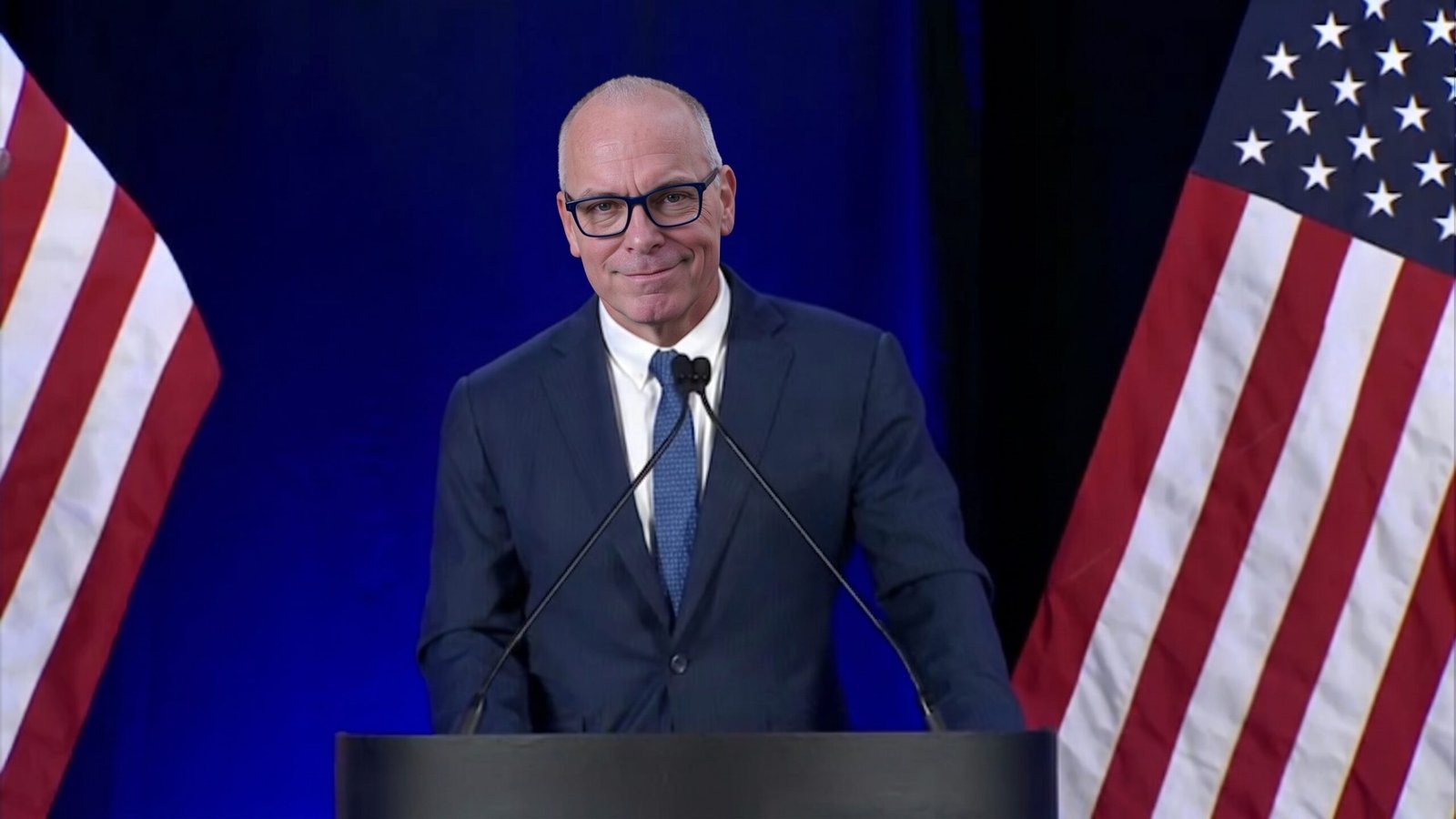
Chaz Stevens is the founder of REVOLT Training and a longtime public-records strategist focused on forcing accountability through process, not protest. His work has triggered policy reversals, criminal prosecutions, and national media coverage by weaponizing bureaucracy, public records laws, and First Amendment doctrine against institutional dysfunction.
Learn more about him on Wikipedia.
Learn more about him on Wikipedia.
Share
Sedition Isn't Free.
If these words have sparked something in you, help keep the fire burning. Since 2008, My Acts of Sedition (MAOS), the official blog of Revolt Training, is independent, unfiltered, and powered by the community—not corporate interests. Your support directly funds the infrastructure and training needed to turn ideas into action.
Fuel The Revolt
Go ahead, speak your mind.
Recent Musings
October 20, 2026
“No Responsive Records” Is an Answer. Here’s How to Read It.
October 20, 2026
“Exempt” Is Not an Explanation: Making an Agency Name the Exemption
October 16, 2026
FOIA Fee Estimate: Ask for the Breakdown, Then Narrow
October 9, 2026
FOIA or Your State’s Records Law? Which One Applies to the Agency You’re Asking
Exposing Hypocrisy
One Story At A Time.